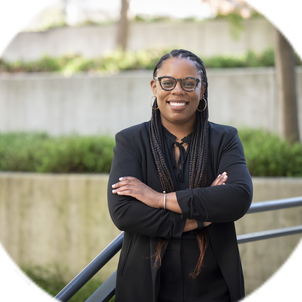
I was a mathematician first and then an economist. I really liked the logic and thinking behind modeling problems, but I also liked learning about financial markets and how they worked. There’s a term in economics called hedging, which essentially means protecting yourself against downside risk – when you buy two assets, for example, and one asset goes down, the other one should go up so that you’re still protected. I guess you could say I wanted to hedge some vocational risk by completing degrees in both economics and mathematics. Now, I’m what you would call a financial engineer, if you want to think about it that way.
My current research focuses on how to use machine learning to understand financial asset pricing. We want to evaluate the right sources of risk and we want to use data and technology to manage it even better. It may not sound as glamorous as building something you can use, but it’s just as important, especially when it comes to making important financial decisions or avoiding a financial crisis. When I was younger I liked math, and I think the biggest reason I liked it was because I liked the challenge. I wanted to study something I had to work at, and you need to work hard to solve these problems.
Our department is very interdisciplinary, and I like that because we look at challenges from all sides. I work with people from a variety of fields – business, computer science, the social sciences – and I think that’s important in managing risk. You need all of those things when designing policies or solutions to bigger social problems. I always tell students to adopt an interdisciplinary mindset when you approach anything. Take some classes in the stats department or the computer science department and try to understand the field where you want your questions answered.
Related spotlights

Lara Weed
Sebastian Fernández